
Fed Meets This Week as Strait of Hormuz Tensions Push Toward a Rate Hike
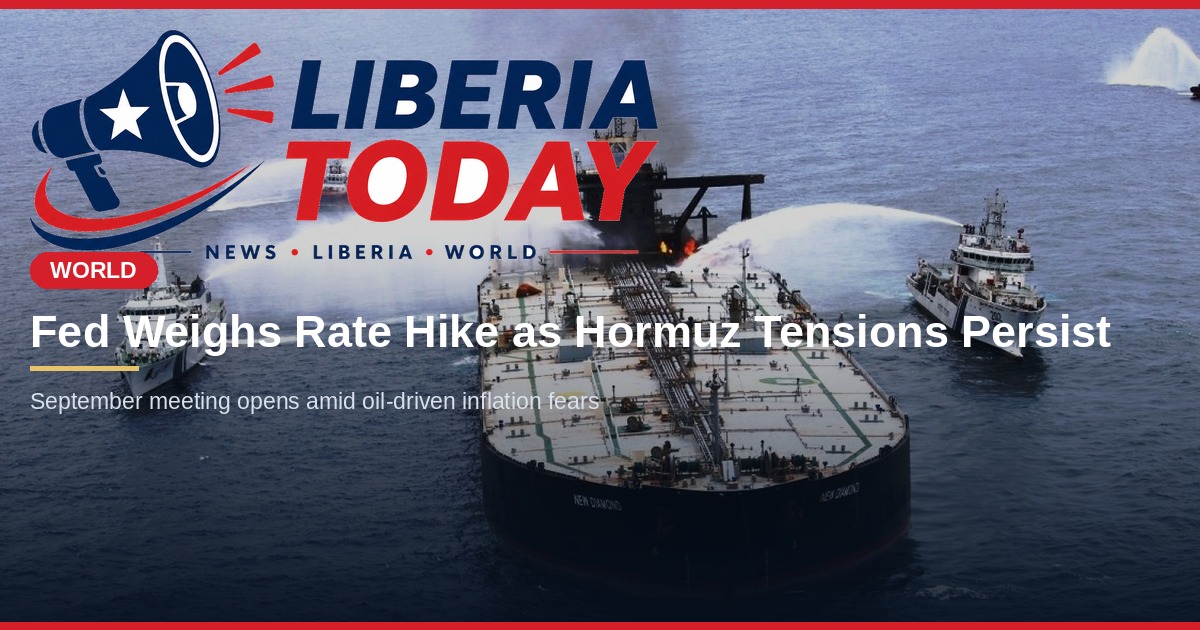
Indian Coast Guard vessels douse a fire aboard the tanker MT New Diamond off Sri Lanka in September 2020 (file photo, unrelated incident) - illustrative of a tanker fire, not the September 2026 Strait of Hormuz disruptions. Photo: Indian Coast Guard, GODL-India, via Wikimedia Commons
The Federal Reserve opens its September 15-16 meeting with markets now pricing in a quarter-point rate hike, a reversal driven by persistent Strait of Hormuz supply disruptions and doubts about the Fed's inflation resolve after July's split vote.
The Federal Reserve's Federal Open Market Committee opened its two-day meeting Tuesday with markets now leaning toward a quarter-point rate increase on Wednesday, a sharp reversal from earlier expectations that the Fed would hold rates steady through the rest of 2026. J.P. Morgan Wealth Management strategists, who had previously expected no further moves this year, now see a hike as the more likely outcome.
Two factors are driving the shift. The first is credibility: July's meeting ended in a tight 9-3 vote to hold the benchmark rate at 3.50%-3.75%, with three members dissenting in favor of a hike and Fed Chair Kevin Warsh offering limited forward guidance, leaving markets uncertain about the committee's actual commitment to controlling inflation. The second is energy: supply-chain disruptions tied to the Iran conflict around the Strait of Hormuz have kept oil prices elevated well beyond what policymakers expected earlier this year, and normalization has been slower than hoped.
Strategists say the base case still assumes eventual de-escalation in the Gulf, but warn that continued blockades could push oil toward $120 a barrel, up from roughly $80 in early August, with prices above $140 raising the risk of recession rather than just higher inflation. Thirty-year Treasury yields have already climbed to their highest level since 2007 as markets price in a longer stretch of elevated inflation expectations.
A September hike, if it comes, is being framed by strategists less as the start of a new tightening cycle than as a credibility-reinforcing move, a signal that the Fed will act on energy-driven inflation risk even with growth described as stable. The decision, due Wednesday afternoon, will be the clearest read yet on how far the Strait of Hormuz standoff is now shaping monetary policy well beyond the energy markets where it started.