
LEC to Roll Out 74,500 Smart Meters Starting October, Targeting Illegal Power Use
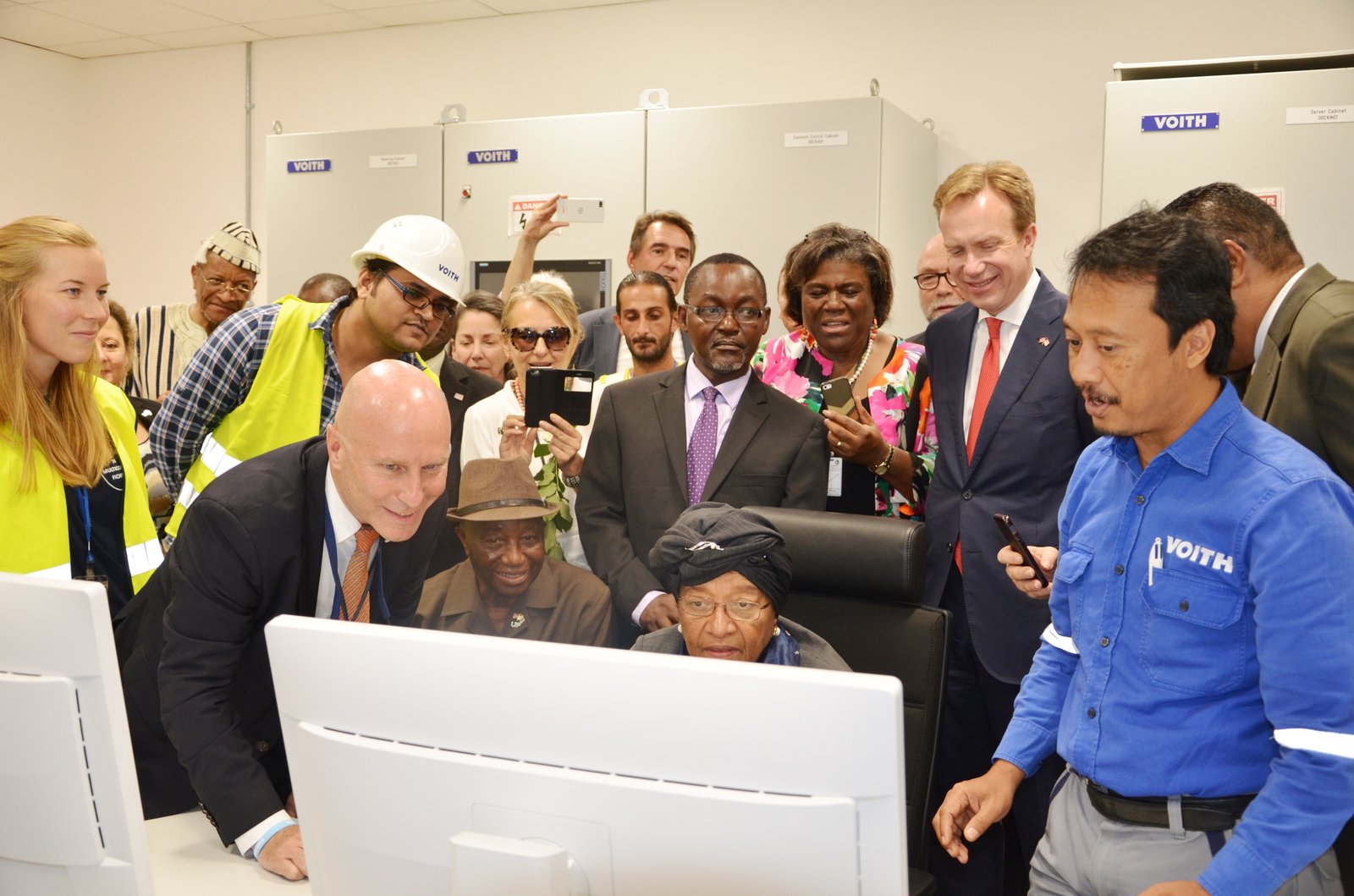
The commissioning of the Mount Coffee Hydropower Plant, Liberia's main power source, in December 2016 (file photo; illustrative of LEC's electricity system, not the smart meter rollout). Photo: U.S. Embassy Monrovia, public domain, via Wikimedia Commons.
The Liberia Electricity Corporation says 14,500 of a planned 74,500 smart meters have already arrived, with deployment starting the first week of October in a bid to curb illegal connections, meter tampering, and revenue losses.
The Liberia Electricity Corporation (LEC) plans to deploy 74,500 smart meters across its customer base, with 14,500 units already in the country and another 60,000 expected to arrive within the next month, Deputy Minister for Press and Public Affairs Daniel Sanoe disclosed at the Ministry of Information's regular press briefing on September 17. Deployment is scheduled to begin during the first week of October, starting with communities already enrolled in LEC's smart-metering pilot program.
The rollout is being carried out in partnership with the technology firm Synapse and is pitched as part of a broader effort to modernize how LEC manages its network. "The program is being implemented in partnership with Synapse and forms part of LEC's broader effort to modernize electricity management and strengthen revenue protection," the statement read.
The stated objectives are squarely about revenue: curbing illegal electricity connections, reducing commercial losses, detecting meter tampering, and strengthening accountability for what customers actually consume. Power theft and tampered meters have long been cited by LEC as a drag on its finances, contributing to a utility that struggles to fully fund maintenance and expansion despite Liberia's growing demand for electricity.
Smart meters can, in principle, deliver real benefits to honest customers too, including more accurate billing and faster detection of outages, but the framing here is unmistakably enforcement-first. Whether the program earns public buy-in will likely hinge on how it is rolled out in practice, particularly whether affected communities see it as a fair modernization step or primarily as a tool for catching non-payers, and on whether LEC can keep pace with the logistics of installing tens of thousands of units without the delays that have dogged past infrastructure pledges.