
Liberia Appeals for $22 Million to Build Its First Cancer Treatment Center
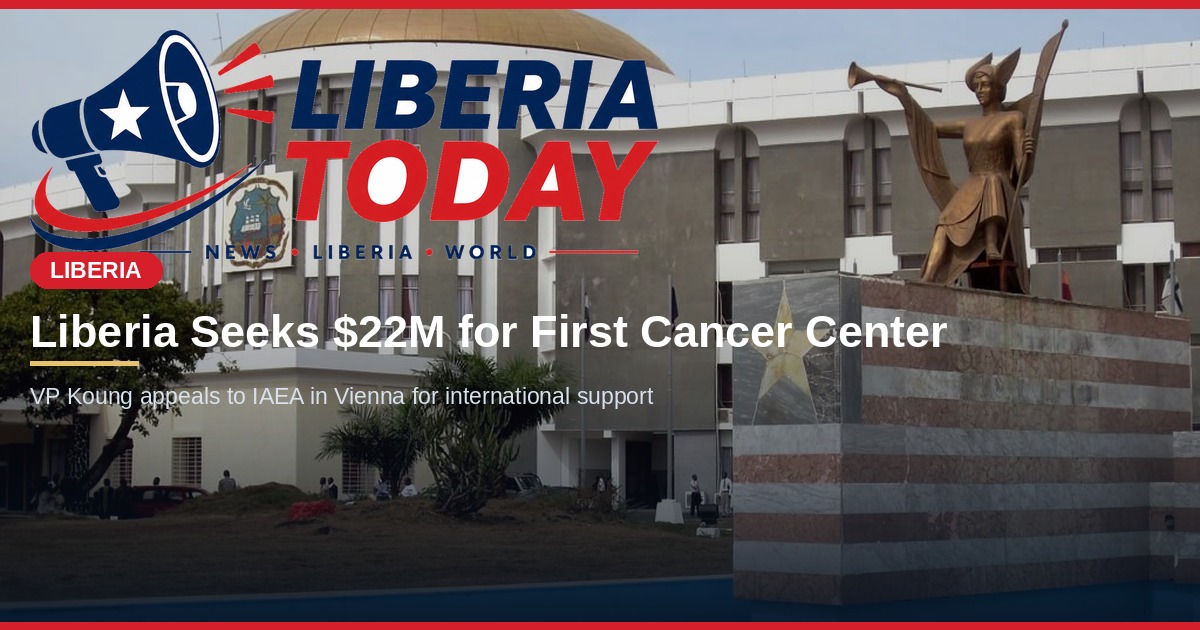
The Capitol Building in Monrovia, seat of Liberia's legislature (file photo; illustrative of the Liberian government, not the IAEA conference in Vienna). Photo: David Stanley, CC BY 2.0, via Wikimedia Commons
Vice President Jeremiah Koung has asked the IAEA in Vienna for international support to help raise the $22 million still needed to build and equip Liberia's first cancer diagnosis and treatment facility.
Vice President Jeremiah Koung has appealed to the International Atomic Energy Agency for help closing a $22 million funding gap standing between Liberia and its first specialized cancer diagnosis and treatment center, telling the IAEA's 70th General Conference in Vienna this week that "access to peaceful nuclear technology must not be determined by geography or national income."
Liberia currently has no facility capable of diagnosing or treating cancer domestically, forcing patients who can afford it to travel abroad for care while thousands of others go untreated each year. President Boakai broke ground on the planned center in July 2025 under the government's ARREST Agenda for Inclusive Development, but construction, equipment and long-term operating costs still require the full $22 million Koung says is the minimum needed to get the facility running.
Koung used the Vienna platform to push for what he called a shift from "isolated technical interventions to a coordinated national development partnership" with the IAEA, specifically asking that the agency's "Rays of Hope" initiative, which helps expand cancer care access in underserved countries, prioritize Liberia. The appeal builds on an existing relationship: the IAEA has already helped Liberia set up a radiological laboratory and acquire an elemental analyzer worth roughly €100,000, and separately supports an agricultural development program through its "Atoms4Food" mission.
Liberia's health ministry has long flagged the absence of cancer treatment infrastructure as one of the more glaring gaps in the country's health system, one that a single ministry budget is unlikely to close on its own. Koung's appeal signals that Monrovia is betting on international donors and technical partners like the IAEA, rather than domestic revenue alone, to bridge that gap. Whether the $22 million materializes will depend on pledges still to come; for now, the groundbreaking from over a year ago remains the most visible progress on the ground.