
Severstal Reverses Course, Backs AMR Over Rival for Liberia's $2 Billion Putu Iron Ore Project
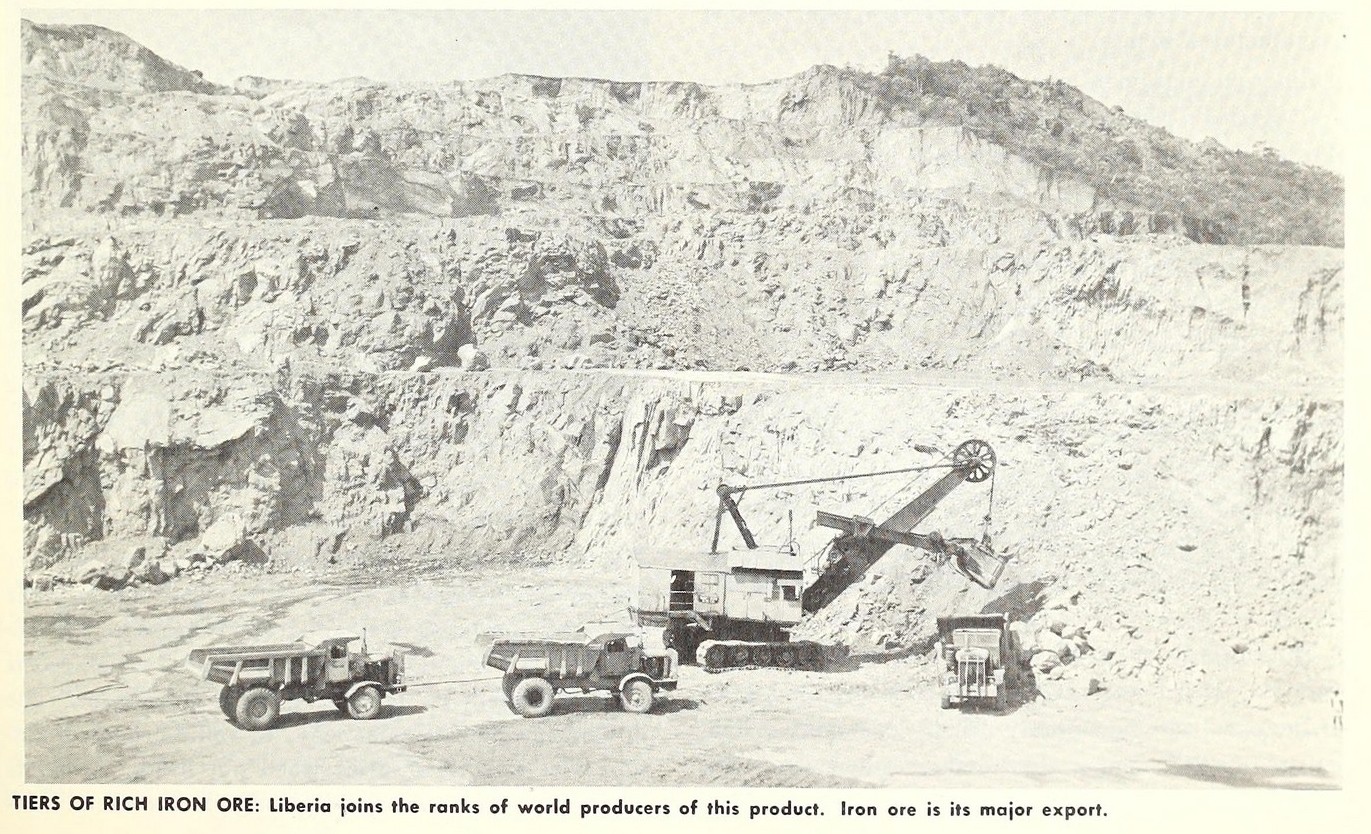
A 1965 US Department of Commerce photograph illustrating Liberia's iron ore export trade (file photo; not the Putu deposit, illustrative of the country's iron ore sector). Photo: Internet Archive Book Images, public domain, via Wikimedia Commons.
Russian steel giant Severstal has dropped its opposition and endorsed Africa Metallic Resources (AMR) as preferred developer of the 2.37-billion-tonne Putu iron ore deposit in Grand Gedeh, after AMR cleared US sanctions review and lined up financing, but affected communities say they are still being left out of the conversation.
Russian steelmaker Severstal has reversed its earlier opposition and thrown its support behind Africa Metallic Resources Inc. (AMR) as the preferred developer of the Putu Range iron ore deposit in Grand Gedeh County, ending a standoff that had stalled one of Liberia's largest untapped mineral assets. The deposit is estimated at 2.37 billion tonnes of ore, and its eventual development has been pitched as a project capable of generating more than 20,000 jobs.
Severstal, which holds a stake in the concession through its earlier involvement with the project, had previously resisted AMR's bid, contributing to a drawn-out competitive review between AMR and rival Planet One Natural Resources Holdings. That review, concluded in December 2025, scored AMR at 88.6 out of 100 against Planet One's 55.6, a wide margin the government has cited as justification for its preference even as the formal standoff continued into this year.
Two developments appear to have unlocked Severstal's reversal. First, AMR cleared a US sanctions review by the Treasury's Office of Foreign Assets Control in May 2026, removing a major legal cloud that had made partners and financiers wary of the company. Second, AMR has since lined up financing commitments through the Africa Finance Corporation, giving the bid the capital backing that a project of this scale requires and that Planet One had reportedly struggled to demonstrate as convincingly.
The reversal clears a path toward development of a deposit that has sat largely stalled for roughly 15 years despite its scale, a delay that has become its own point of local frustration. Joseph Geebro, chairman of the Putu Contact Group representing communities in the project's footprint, welcomed the renewed momentum with visible skepticism about whether it will translate into anything for residents: "What about us, the affected communities? Are we going to be silenced like before?"
Geebro's question points to the harder test ahead. Liberia's concession history, including at Putu itself, includes long stretches where communities living on top of mineral wealth saw little of the promised jobs, infrastructure or revenue-sharing before projects stalled or changed hands. With Severstal's objection now resolved and a financed, sanctions-cleared developer in place, the practical next step in Grand Gedeh will not be a green light in the abstract but a concrete community benefit-sharing agreement, and Geebro's "like before" warning suggests that agreement will be watched closely rather than taken on faith.