
Boakai: 'We Won't Muzzle the Press,' President Tells Media Dinner
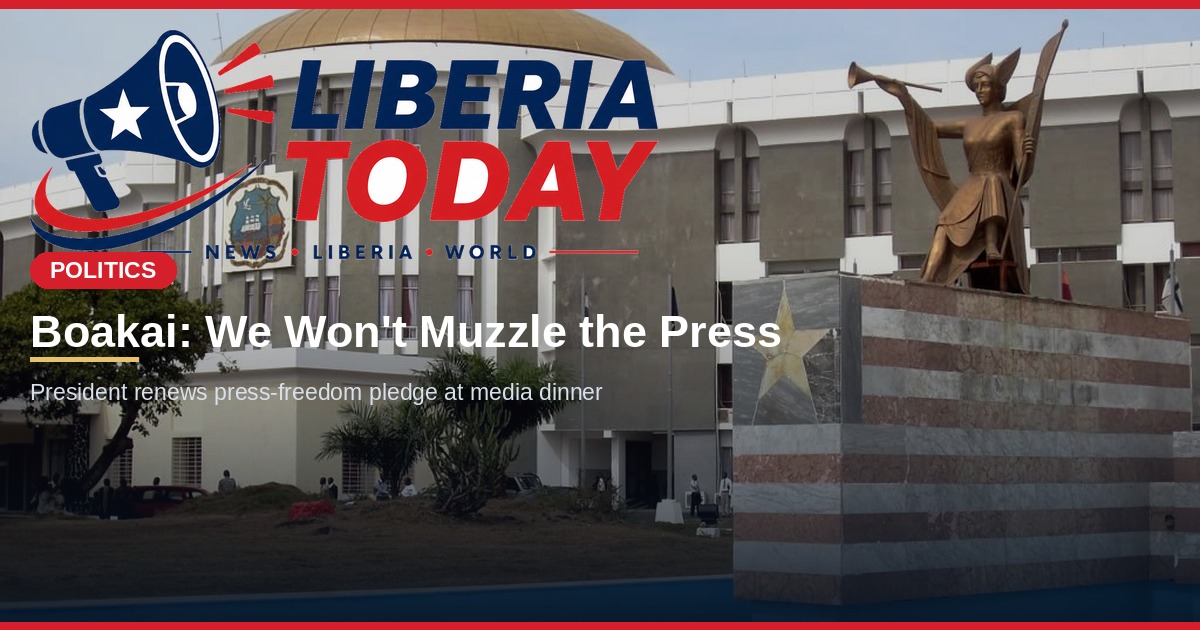
The Capitol Building in Monrovia, seat of Liberia's legislature (file photo; not the media dinner venue, illustrative of the Liberian government). Photo: David Stanley, CC BY 2.0, via Wikimedia Commons
At the second Presidential Media Dinner, President Boakai pledged his government will never treat the press as an institution to be controlled, reaffirming Liberia's commitment to the Table Mountain Declaration.
President Joseph Boakai used the second Annual Presidential Media Dinner at the Ministerial Complex in Congo Town to deliver his most direct assurance yet to Liberia's press corps, declaring that "this Government will never take the media to be an institution to be muzzled or controlled." The dinner, held September 12, followed weeks of pressure from the Press Union of Liberia over unresolved government debts to media houses and inadequate journalist pay.
Boakai told the assembled editors and reporters that "our commitment to the principles of the Table Mountain Declaration remains firm," invoking the pan-African press freedom charter that commits signatory governments to decriminalizing media offenses and protecting journalists from state interference. He framed government and media as partners with distinct roles but a shared responsibility to serve the Liberian public.
The president acknowledged that friction between officials and reporters is a normal feature of democratic life rather than a sign of dysfunction, urging both sides to maintain professionalism even when their interests clash. He called on journalists to uphold accuracy and fairness while scrutinizing government conduct, and committed his administration to staying accessible and responsive to press inquiries rather than retreating behind a wall of official silence.
The dinner carries added weight this year: it continues an initiative launched by the late Ambassador Sylvester M. Grigsby, and it comes as the Press Union has publicly pressed the government on outstanding debts to media outlets and reports of political interference at community radio stations in some counties. Boakai's rhetorical commitment to media independence was clear; whether it translates into resolved invoices and stronger protections for journalists outside the capital remains the test the Press Union says it will be watching.